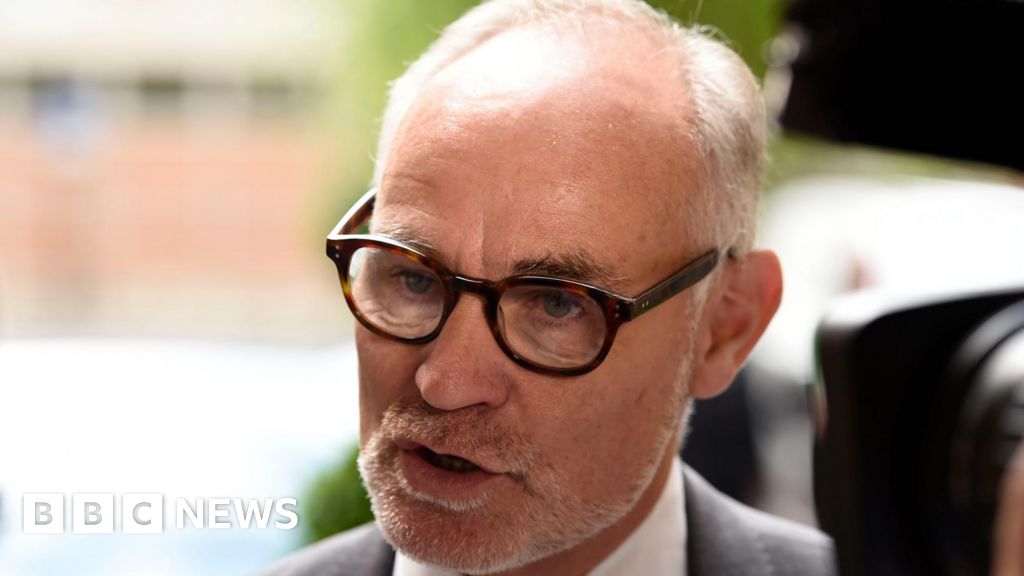
Former MP Crispin Blunt Faces Significant Drug Charges Ahead of Court Appearance
In a development that has sent ripples through the British political landscape, Crispin Blunt, a former Conservative Member of Parliament, has been formally charged with drug offences. The Crown Prosecution Service (CPS) confirmed on Wednesday that Blunt, aged 65, is facing serious allegations involving both Class A and Class B controlled drugs. This announcement marks a pivotal moment for a politician who served in Parliament for over a quarter of a century, and it sets the stage for a highly anticipated court appearance scheduled for March 25.
The charges against Blunt stem from a police visit to his home in October 2023, which, according to authorities, was in relation to a "separate matter." This initial visit ultimately led to the uncovering of evidence that prompted the current charges. The news comes as Blunt was already preparing to step down from his parliamentary role in the upcoming July 2024 general election, adding a layer of complexity to his public life and political legacy.
For those following British politics and legal developments, understanding the nature of these charges and the process ahead is crucial. This article will delve into the specifics of the allegations, explore the legal framework surrounding Class A and B drugs in the UK, provide context on Crispin Blunt's career, and outline the judicial journey that awaits him.
The Charges Unveiled: A Legal Overview of Class A and B Substances
The Crown Prosecution Service, through Malcolm McHaffie, Head of the CPS Special Crime Division, specified the four charges brought against Crispin Blunt. These include one count of possessing a controlled drug of Class A and three counts of possessing a controlled drug of Class B. To comprehend the gravity of these accusations, it's essential to understand the distinction between Class A and Class B drugs under the UK's Misuse of Drugs Act 1971.
- Class A Drugs: These are considered the most harmful substances, carrying the most severe penalties for offences related to possession, supply, or production. Examples often cited include heroin, cocaine, ecstasy (MDMA), and LSD. Possession of Class A drugs can lead to a prison sentence of up to seven years, an unlimited fine, or both. The legal framework surrounding these substances reflects a strong societal stance against drugs deemed to have a high potential for harm and addiction.
- Class B Drugs: While still illegal and harmful, Class B drugs are perceived as less dangerous than Class A substances. Common examples include cannabis, amphetamines, and barbiturates. Possession of Class B drugs can result in a prison sentence of up to five years, an unlimited fine, or both. The distinction between Class A and Class B is a critical factor in determining the potential legal repercussions and reflects the varying degrees of perceived societal harm associated with different controlled substances.
The fact that Blunt faces charges for both classifications underscores the serious nature of the allegations. The legal system will now proceed to evaluate the evidence and circumstances surrounding these possession charges. The initial court appearance will be a procedural but significant step, marking the official commencement of the judicial process. For more detailed information on the evolving situation, readers can refer to this related article: Former UK MP Crispin Blunt Charged with Drug Offences.
Background and Context: Crispin Blunt's Public Service and the Investigation's Genesis
Crispin Blunt is a prominent figure in British politics, having served as the Conservative Member of Parliament for Reigate, Surrey, for over 25 years. First elected in 1997, his parliamentary career has seen him hold various positions, including Parliamentary Under-Secretary of State for Prisons and Youth Justice from 2010 to 2012. Known for his independent streak and often outspoken views on matters such as drug policy reform and foreign affairs, Blunt has been a recognizable voice within the Conservative Party, even at times challenging party lines. His decision to stand down at the next general election, announced prior to these charges, signaled the impending end of a long and impactful career in public service.
The genesis of these charges, as stated by the police, traces back to a visit to Blunt's home in October 2023. This visit was reportedly in connection with a "separate matter," which eventually led to officers finding controlled substances. It is common for investigations into one matter to uncover evidence related to other potential offences, leading to additional charges. The CPS's decision to charge him indicates that they believe there is sufficient evidence and that it is in the public interest to prosecute. The timing of these charges, as he prepares to exit public office, adds a complex layer to his political legacy and personal reputation.
This incident naturally raises questions about the scrutiny public figures face and the expectations placed upon those in positions of power. The principle of innocent until proven guilty remains paramount, and the upcoming legal proceedings will determine the factual merits of the case. Nevertheless, such charges against a former lawmaker inevitably spark public discussion about accountability and the standards expected from elected officials, both during and after their tenure.
The Judicial Process Ahead: What to Expect on March 25th and Beyond
Crispin Blunt is due to appear in court on March 25, a date that marks a critical juncture in the legal proceedings. This initial court appearance will likely take place at a Magistrates' Court, which is the starting point for most criminal cases in England and Wales. During this hearing, several key procedural steps will typically occur:
- Identification and Plea: The court will confirm Blunt's identity, and he will have the opportunity to enter a plea (guilty or not guilty) to each of the four charges.
- Bail Conditions: If a not guilty plea is entered, the court will consider bail conditions, determining whether he can be released until future hearings and under what terms. Given the nature of the charges and his standing, it is likely he would be granted unconditional or conditional bail.
- Case Management: The court will set out a timetable for the case, including dates for further hearings. Depending on the plea and the complexity of the case, it might be resolved in the Magistrates' Court or, if it's deemed more serious or if the penalties exceed the Magistrates' Court's sentencing powers, it could be sent to the Crown Court for trial.
The legal process, particularly when dealing with charges related to controlled substances, can be lengthy and involves several stages, including disclosure of evidence, potential pre-trial hearings, and, if a not guilty plea is maintained, a full trial. The outcome could range from a non-custodial sentence (such as a fine, community order, or suspended sentence) to a custodial sentence, depending on the specifics of the evidence, the judge's discretion, and any mitigating or aggravating factors. The principle of the rule of law ensures that every individual, regardless of their public standing, is subject to the same legal scrutiny. Readers can follow updates on this significant legal event here: Crispin Blunt's Drug Charges: Court Date Set March 25.
Navigating Public Scrutiny: The Broader Implications for Political Figures
The charges against Crispin Blunt highlight the intense public scrutiny faced by individuals in political office, even those stepping down. When allegations of criminal conduct emerge against a lawmaker, it invariably sparks broader discussions about integrity, public trust, and the standards expected of those who legislate and govern. For politicians and public servants, the consequences extend beyond potential legal penalties to include damage to reputation, erosion of public confidence, and implications for their party and the wider political system.
Here are some practical insights into the implications for political figures and the broader public:
- Upholding Trust: Public officials are held to a higher standard of conduct, and any breach of law or ethical guidelines can severely damage the public's trust in institutions. This trust is fundamental to a functioning democracy.
- Due Diligence and Compliance: For individuals contemplating public service, or those currently serving, it underscores the absolute necessity of rigorous legal compliance in all aspects of life. Even seemingly private matters can become public knowledge and have significant ramifications.
- Transparency vs. Privacy: There's a constant tension between a public figure's right to privacy and the public's right to know. In cases of alleged criminal activity, the balance often shifts towards transparency, given the public interest in the conduct of its representatives.
- Crisis Management: When such situations arise, political parties and individuals often engage in careful crisis management to address public and media reactions, aiming to mitigate reputational damage while respecting the ongoing legal process.
- Impact on Policy Debates: While the individual case is distinct, it can sometimes influence broader policy debates, such as discussions around drug legislation, parliamentary standards, or accountability mechanisms for public figures.
These circumstances serve as a stark reminder that the rule of law applies to everyone, irrespective of their position. It also prompts important reflections on the unique pressures and responsibilities that come with holding public office.
Conclusion
The charging of former British lawmaker Crispin Blunt with Class A and B drug offences marks a significant and concerning development. As he prepares to appear in court on March 25, the legal process will commence to examine the evidence surrounding these serious allegations. This incident not only impacts Crispin Blunt personally but also raises important questions about the conduct of public figures, the expectations of integrity in political life, and the strict legal framework governing controlled substances in the United Kingdom. As the case unfolds, the public and media will undoubtedly be watching closely, awaiting the outcome of a process that underscores the principle that all individuals are subject to the law.